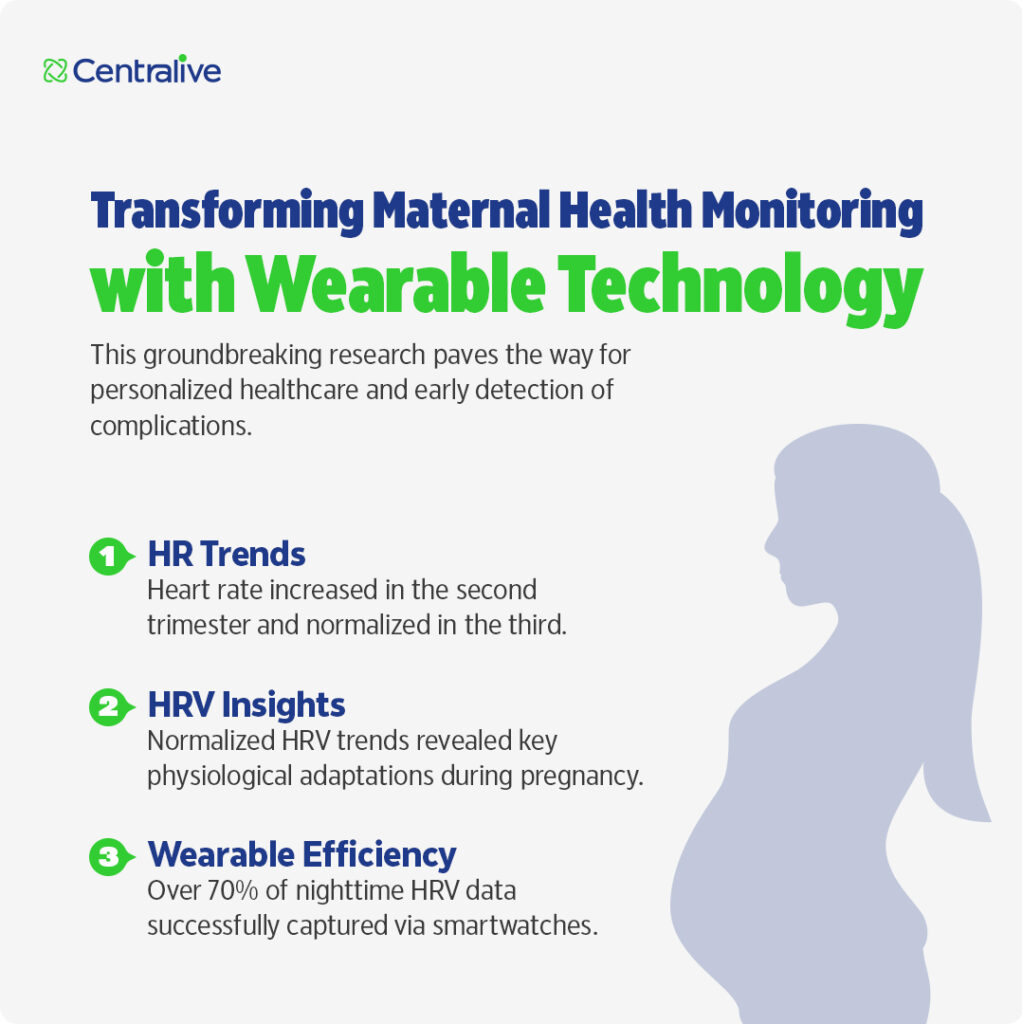
Heart rate variability (HRV) offers valuable insights into maternal health, but traditional monitoring methods fall short of capturing long-term trends. In a recent study published in JMIR mHealth and uHealth, researchers demonstrated the potential of IoT-based wearables for continuous HRV monitoring during pregnancy and postpartum.
Key insights:
- Trends in HR and HRV:
- HR increased significantly during the second trimester but began to decrease slightly in the third trimester.
- Time-domain HRV parameters (e.g., AVNN, SDNN) decreased during the second trimester but recovered partially in the third trimester.
- Normalized HRV trends revealed more accurate insights by removing HR influences, reflecting subtle physiological adaptations.
- Demographic Influences:
- Age and education levels were significantly associated with HRV trends, suggesting potential links to stress and physiological adaptability during pregnancy.
- Technological Feasibility:
- Over 70% of potential nighttime data points were successfully collected, affirming the robustness of IoT-based monitoring for long-term maternal health assessment.
This study exemplifies how Centralive can empower groundbreaking research in maternal health, paving the way for personalized, non-invasive health interventions.