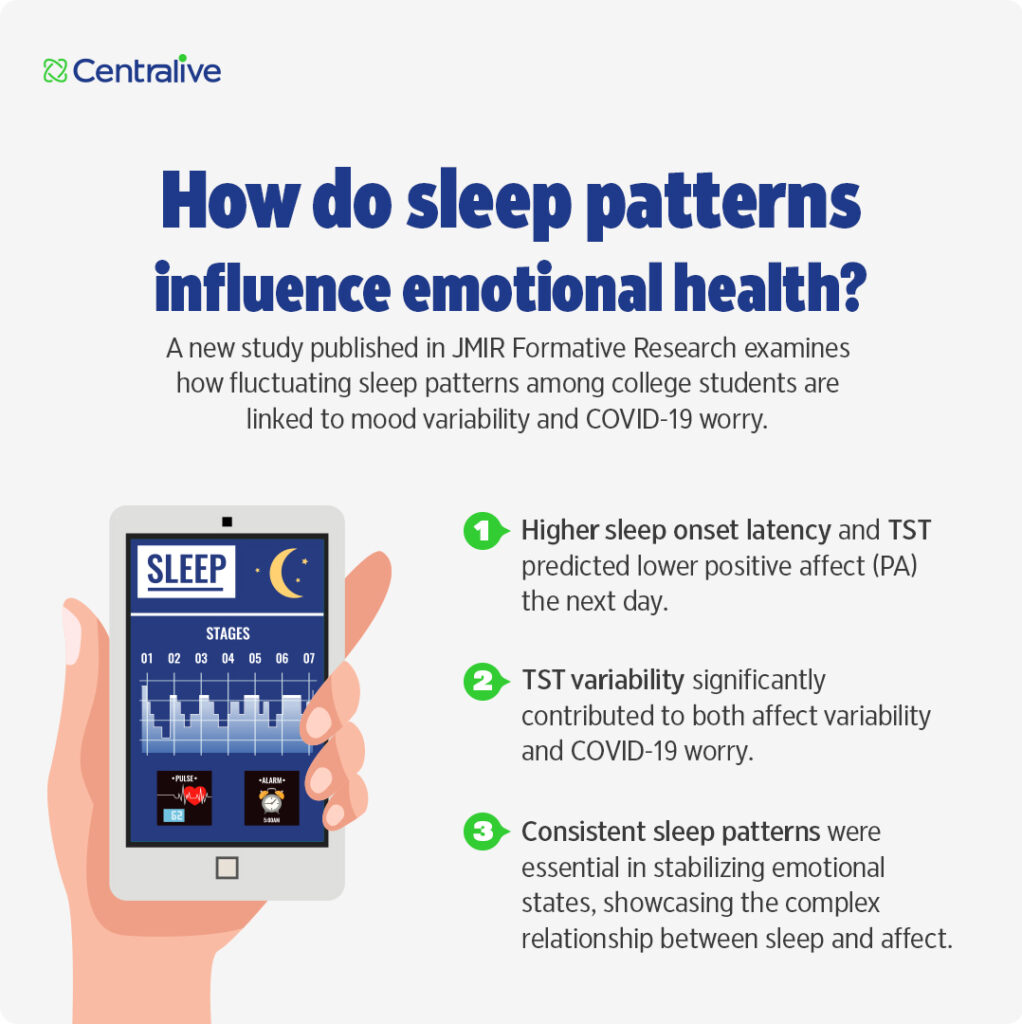
🌙 A new study published in JMIR Formative Research examines how fluctuating sleep patterns among college students are linked to mood variability and COVID-19 worry. Using Oura rings and smartwatches, the study monitored daily affective states alongside physiological data to reveal important insights:
Key Findings:
- Sleep Duration and Quality Impact Emotional States:
The research found that longer sleep onset latency (SOL) and total sleep time (TST) on the previous night were associated with lower positive affect (PA) the following day. Specifically, higher TST over the 3-month study period correlated with consistently lower PA, suggesting the complex role of sleep in emotional regulation. - Sleep Variability Fuels Emotional Fluctuations:
Greater variability in sleep (such as fluctuating sleep durations) was a significant predictor of emotional volatility. This variability was linked to both higher PA and NA variability and even increased COVID-19 worry, highlighting the need for stable sleep patterns to maintain emotional balance. - Holistic Data Approach Using Wearables:
Through the use of Oura rings and smartwatches, the study captured a comprehensive set of data, from sleep patterns to daily affect assessments. This continuous, non-invasive data collection process proved essential for accurately modeling and predicting emotional responses.
At Centralive, we empower mental health research by providing LivingLab platforms that integrate wearable data with machine learning to predict and manage emotional well-being. Our tools enable seamless analysis of complex data, advancing personalized interventions.
📖Link to download the full paper:
https://48147625.hs-sites.com/centralive-download-article-0-0-0
Authors: Zahra Avah Mousavi, Jocelyn Lai, Katharine Simon, Alexander P Rivera, Asal Yunusova, Sirui Hu, Sina Labbaf, Salar Jafarlou, Nikil D Dutt, Ramesh C Jain, Amir M Rahmani, Jessica L Borelli