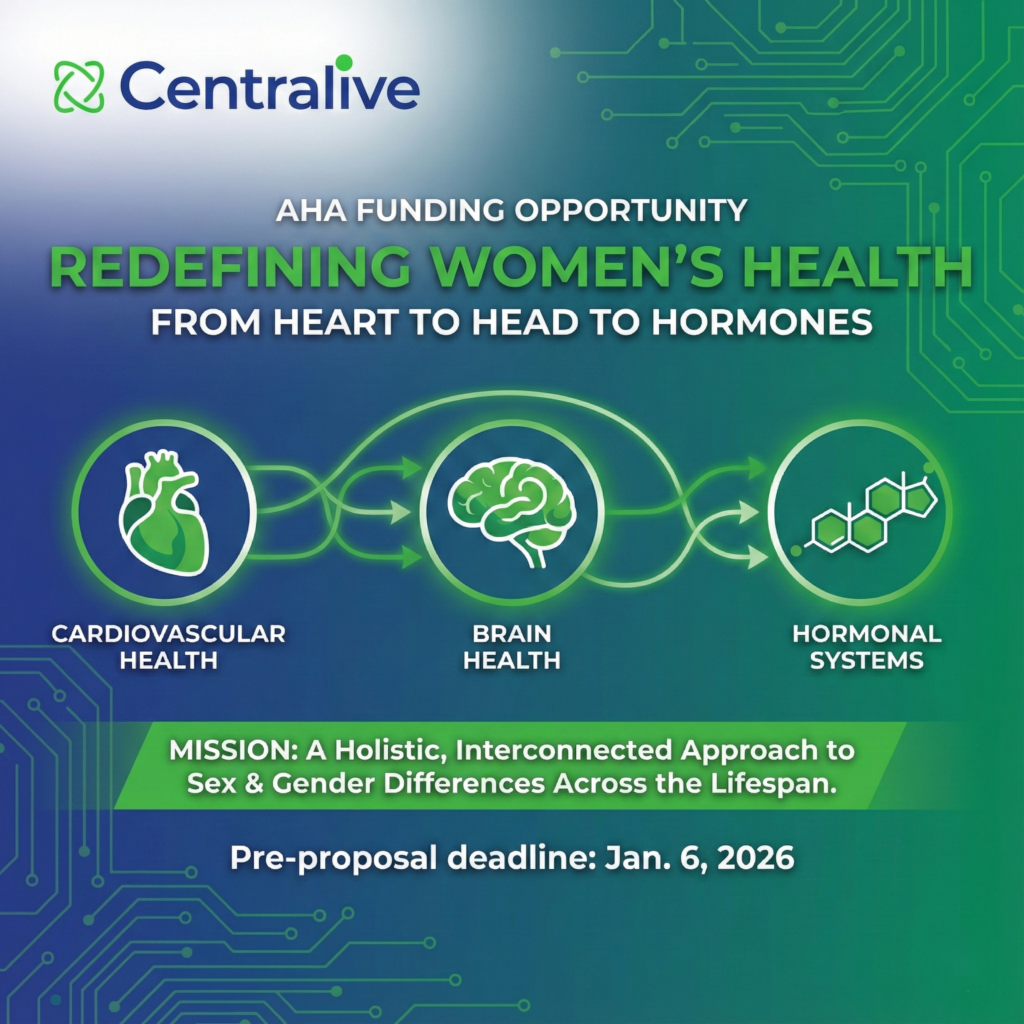
The American Heart Association has launched a competitive funding opportunity aimed at propelling innovative science that addresses persistent gaps in women’s health research. Titled Redefining Women’s Health: From Heart to Head to Hormones, the program invites investigators, interdisciplinary teams, and clinician-scientists to propose novel solutions for conditions that disproportionately or uniquely affect women’s health across the lifespan.
This initiative reflects a growing recognition that many conditions experienced by women have been historically underdiagnosed, undertreated, or poorly understood due to limited sex-specific research, and underscores the need for translational science that can bridge biological, clinical, and care delivery domains.
Goals and Scope
The call for proposals is part of the AHA’s Studio Red/Go Red for Women Fund portfolio, and is structured to support research with high potential for impact and real-world application. Up to ten awards of $100,000 each will be made for one-year projects, with a total program budget of roughly $1 million. Applicants must submit a required pre-proposal by January 6, 2026 to be considered for invitation to the full application stage.
Beyond traditional research funding, the program incorporates supports such as educational content on intellectual property, regulatory pathways, reimbursement strategies, commercialization, and pitch development, provided through monthly webinars during the award period. Top projects may even be advanced into the AHA’s Studio Red incubator for further development and potential market launch.
Priority Research Areas
The opportunity targets four priority research domains, each addressing a critical unmet need in women’s health:
1. Conditions that disproportionately impact women or present differently in women
Examples include ischemia with non-obstructive coronary arteries (INOCA) and cardiovascular microvascular disease, areas where symptoms and diagnostic pathways differ by sex and where sex-specific predictors and therapies remain limited.
2. Autoimmune disease screening, predictors, and care models
Autoimmune diseases occur far more frequently in women than in men, yet many lack reliable early biomarkers or tailored care frameworks, contributing to diagnostic delays and suboptimal outcomes.
3. Conditions that exclusively impact women
This category includes disorders such as endometriosis, where current treatments often rely on hormonal suppression or invasive interventions, and novel therapeutic approaches are urgently needed.
4. Heavy menstrual bleeding (HMB)
A leading cause of iron-deficiency anemia in reproductive-aged women, HMB suffers from inconsistent classification systems and gaps in evidence linking phenotypic subgroups with optimized therapies.
Proposals may span basic, translational, and clinical research, as well as digital health innovation, diagnostics, predictive analytics, or improved care models. Cross-disciplinary and community-engaged approaches are strongly encouraged to foster collaborations that can accelerate progress.
Why This Matters Now
Cardiovascular disease remains the leading cause of death among women globally, yet sex differences in disease presentation, physiology, and outcomes are only recently gaining prominence in research agendas. Similarly, the interplay between hormonal status, immune function, brain health, and cardiovascular risk over the life course remains poorly delineated despite mounting evidence that these factors influence disease susceptibility and progression in women.
By deliberately supporting science that spans heart to head to hormones, the AHA initiative aims to dismantle silos between specialties and drive integrative research that can yield breakthroughs in diagnosis, intervention, and care delivery.
Call to Action
For investigators engaged in women’s health research, this funding represents an opportunity to pursue bold ideas with translational potential, supported not only by grant resources but also by structured intellectual and commercialization development. The January 6, 2026 pre-proposal deadline is fast approaching, making this a moment to refine high-impact concepts and form multidisciplinary teams that can address longstanding scientific and clinical challenges in women’s health.
👉 See full details and eligibility here.