Monitoring heart rate variability (HRV) over time offers a powerful lens into the body’s long-term autonomic regulation. Among the various HRV analysis methods, frequency-domain features provide crucial insights into the balance between sympathetic and parasympathetic nervous system activity. For researchers, clinicians, and biofeedback practitioners aiming to assess chronic stress, fatigue, or overall autonomic adaptability, these features serve as essential tools. This post outlines the best practices for using frequency-domain HRV metrics in long-term monitoring.
Why Frequency-Domain Features Matter
Frequency-domain analysis decomposes HRV into specific bands:
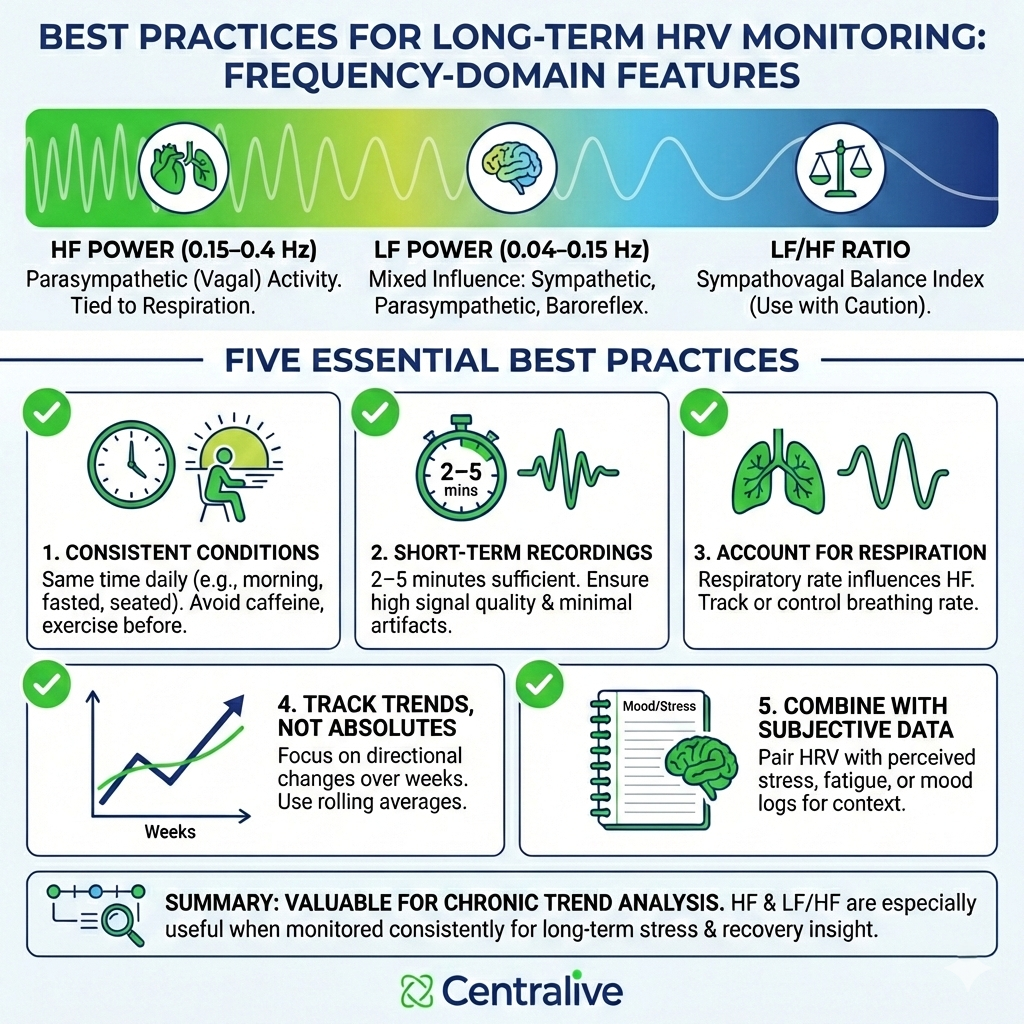
- High-Frequency (HF) Power (0.15–0.4 Hz): Primarily reflects parasympathetic (vagal) activity. Closely tied to respiratory sinus arrhythmia.
- Low-Frequency (LF) Power (0.04–0.15 Hz): Reflects a mix of sympathetic, parasympathetic, and baroreflex influences.
- LF/HF Ratio: Interpreted (with caution) as an index of sympathovagal balance.
These features can help track autonomic shifts due to chronic stress, behavioral interventions, lifestyle changes, and health deterioration or recovery.
Recommended Features for Long-Term Assessment
1. High-Frequency (HF) Power
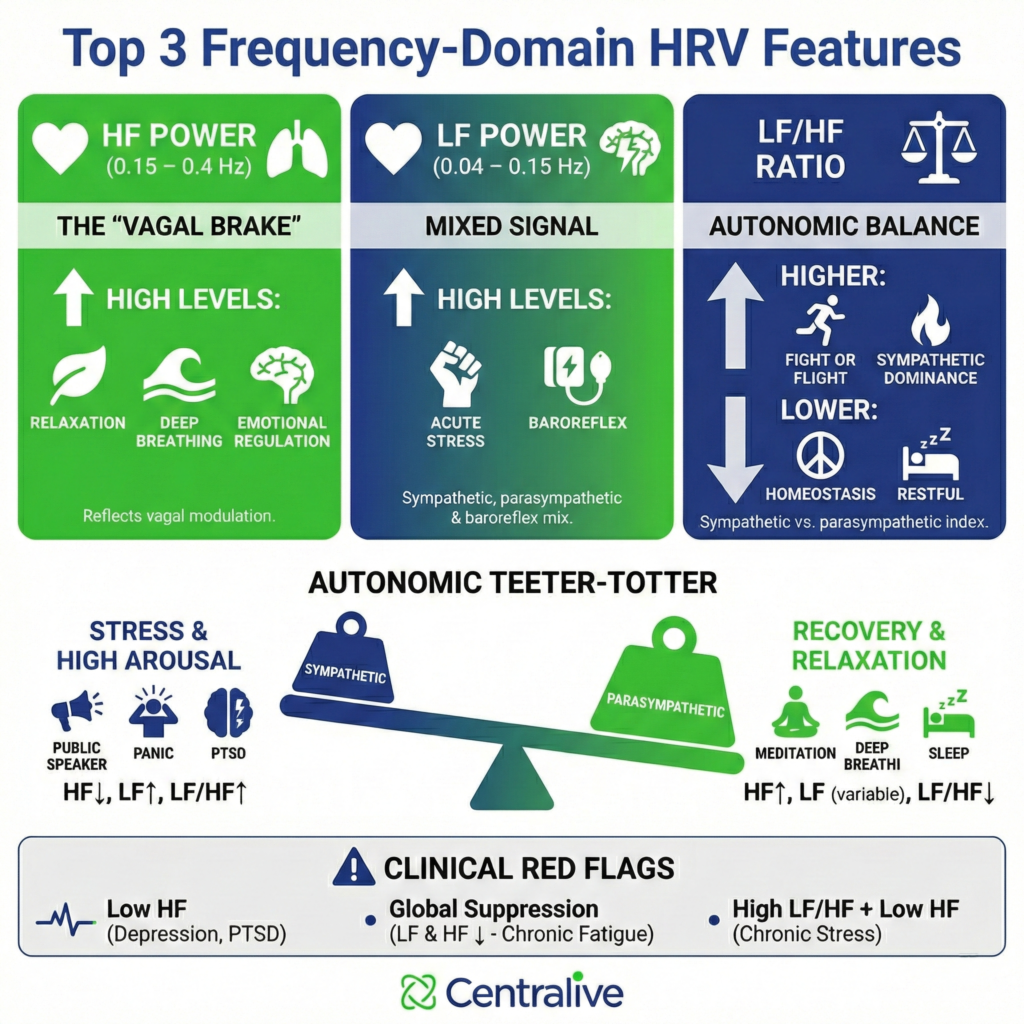
- Best single marker for vagal tone
- Chronic stress, PTSD, and depression are consistently linked to reduced HF power
- Sensitive to relaxation and breathing interventions
- Clinical relevance: Reduced HF power has been consistently observed in meta-analyses of patients with anxiety disorders, depression, and PTSD. For example, depressed patients show significantly lower resting HF power than healthy controls, and HF increases with paced breathing or mindfulness.
2. LF/HF Ratio
- Use to track trends in autonomic imbalance
- Elevated over time in chronic stress or sympathetic overdrive
- Helps identify sustained reduction in vagal input (via falling HF)
- Clinical relevance: Elevated LF/HF ratio is a well-documented pattern during stress-inducing tasks (e.g., public speaking, cognitive load). Chronically high LF/HF is associated with sympathetic dominance and reduced adaptability in stress-related disorders.
3. Low-Frequency (LF) Power
- Interpret with context
- May decrease under chronic stress due to overall autonomic withdrawal
- Should not be interpreted in isolation
- Clinical relevance: LF power is context-sensitive—while it may rise during acute stress due to baroreflex activation, chronic mental health conditions often show a general suppression of both LF and HF, reflecting low overall autonomic engagement.
Best Practices for Consistent Longitudinal Monitoring
✅ Record Under Consistent Conditions
- Measure at the same time daily (e.g., morning, fasted, seated at rest)
- Avoid caffeine, exercise, or meals prior to recording
✅ Use Short-Term Recordings
- 2 to 5-minute ECG or PPG recordings are sufficient for frequency analysis
- Ensure high signal quality and minimal artifacts
✅ Account for Respiration
- Respiratory rate directly influences HF power
- Use respiration tracking if available or control for breathing rate during measurements
✅ Track Trends, Not Absolute Values
- Individual baselines vary—look for directional changes over weeks
- Use smoothing or rolling averages to reduce daily variability
✅ Combine with Subjective Data
- Pair HRV trends with perceived stress, fatigue, or mood logs
- Enhances interpretation of physiological data
Summary
When monitored correctly, frequency-domain HRV metrics provide a valuable, non-invasive window into the body’s long-term stress burden and recovery capacity. HF power and LF/HF ratio are especially useful for chronic trend analysis, but only when measured consistently and interpreted in context. By referencing evidence from clinical literature and applying consistent methods, researchers and health professionals can leverage HRV as a powerful tool for long-term psychophysiological assessment.