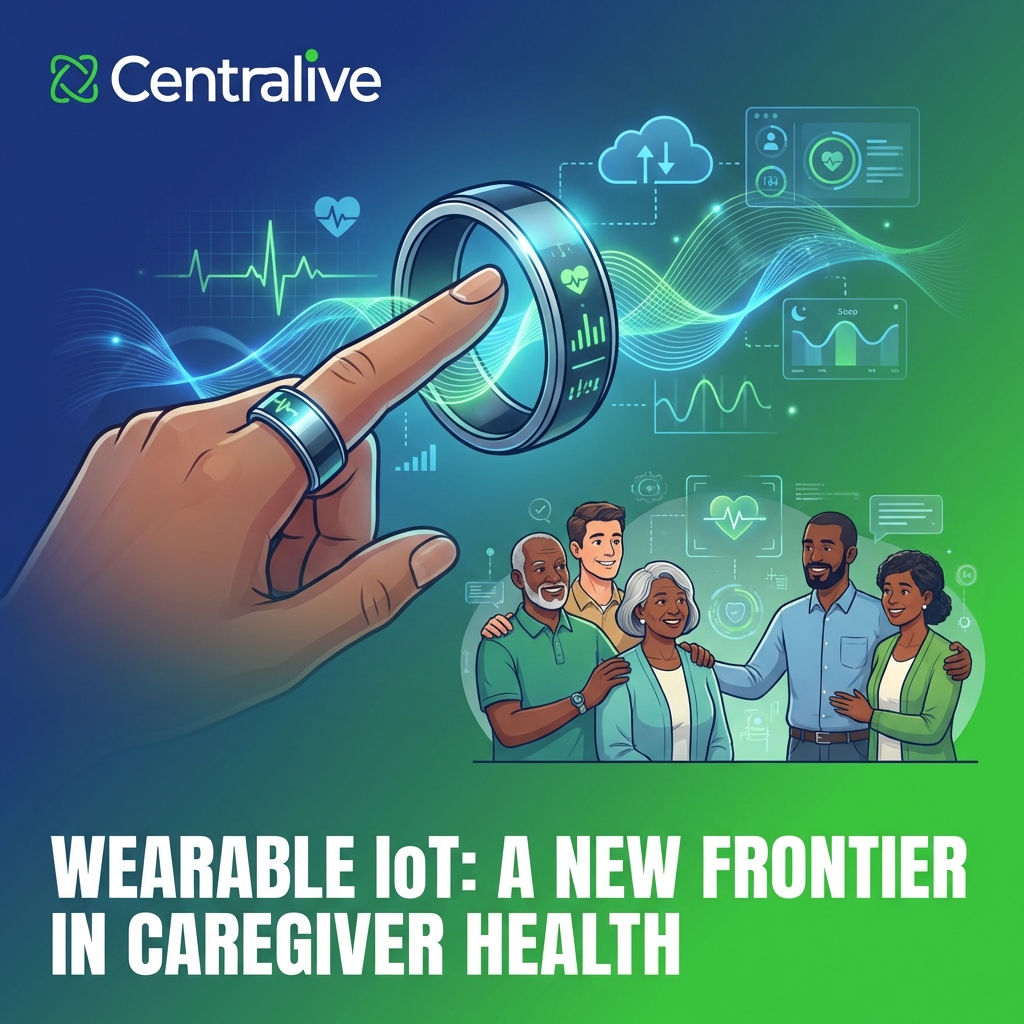
Can Wearable IoT Technology Improve Sleep for Dementia Caregivers?
Family caregivers of persons with dementia (PWD) face a constant burden that often wreaks havoc on their sleep quality. Traditional methods of assessing this burden rely on surveys, which can be limited by language barriers and subjective bias. A recent study explores how Wearable Internet-of-Things (WIOT) technology can bridge this gap.
Methodology: Objective Monitoring
In a Randomized Controlled Trial (RCT), researchers utilized smartring technology to monitor the sleep patterns of 103 ethnically diverse caregivers (including non-Hispanic White, Hispanic, Korean, and Vietnamese participants). Over a 3-month period, the study compared a culturally specific home-based caregiver support intervention group (IG) against an attention control group (CG).
Key Findings
The study yielded significant insights regarding the effectiveness of interventions on sleep architecture:
- REM Sleep Improvement: The intervention group saw a significant increase in REM sleep duration (+0.06 min), whereas the control group experienced a decrease (-0.12 min).
- Caregiver Relationship Dynamics: There was a distinct difference in how caregiving subgroups responded. Adult-child caregivers showed significantly improved sleep onset latency (falling asleep faster) compared to spousal caregivers.
Impact and Conclusion
The preliminary results demonstrate that WIOT is a feasible, objective tool for measuring sleep health in diverse populations where English proficiency might limit survey accuracy. While the intervention proved beneficial, the data suggests that spousal caregivers may require more targeted or different types of support compared to adult children to achieve similar sleep quality improvements.
Authors: Jung-Ah Lee, Jiuchen Zhang, Amir Rahmani, Annie Qu
This research was powered by the Centralive Platform.
Join our network for deeper insights: https://newsletter.centralive.health/signup