Sleep, Circadian Rhythms, and Substance Use Disorders
Scope
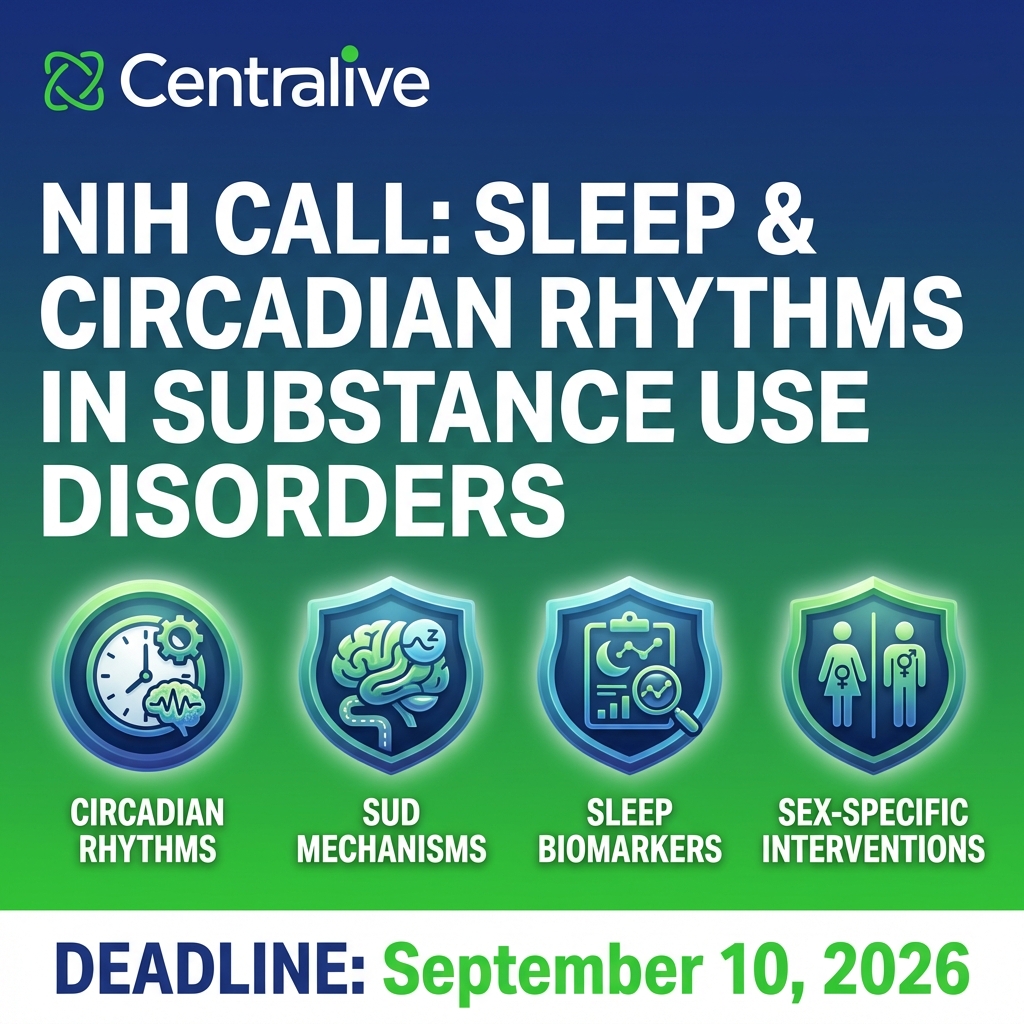
The National Institutes of Health (NIH) has highlighted a critical need to understand the biological mechanisms that underlie the relationship between sleep/circadian rhythms and substance use disorders (SUDs). Sleep dysregulation is prevalent in over 75% of individuals with SUDs and poses a major challenge to recovery. This funding priority seeks research that:
- Offers insights into the fundamental mechanistic processes linking SUDs to disorders of sleep and circadian rhythms.
- Identifies sleep/circadian-based markers for managing risks associated with developing SUDs or predicting relapse.
- Discovers novel therapeutic targets based on these biological intersections.
Eligibility & Partnerships
This is an investigator-initiated research priority. Participating Institutes, Centers, and Offices (ICOs) include:
- NIDA (National Institute on Drug Abuse)
- NIAAA (National Institute on Alcohol Abuse and Alcoholism)
- ORWH (Office of Research on Women’s Health) – specifically interested in sex-specific interventions and hormonal fluctuations.
Application Requirements
Applicants should not look for a specific Notice of Funding Opportunity (NOFO) unique to this topic. Instead, researchers must:
- Apply through an appropriate NIH Parent Funding Announcement (e.g., R01, R21) or other broad NIH opportunities available on Grants.gov.
- Ensure the proposal aligns with the mission of the participating ICOs.
- Reference the Highlighted Topic logic in the application where appropriate to signal alignment with this priority.
Deadline: This topic is active until September 10, 2026.
Stay updated on the latest health tech funding: https://newsletter.centralive.health/signup