𝗛𝗼𝘄 𝗔𝗰𝗰𝘂𝗿𝗮𝘁𝗲 𝗶𝘀 𝗬𝗼𝘂𝗿 𝗚𝗮𝗿𝗺𝗶𝗻 𝗩𝗢𝟮 𝗠𝗮𝘅?
In the world of fitness and longevity, VO2 Max is frequently hailed as the definitive metric for cardiovascular health. Representing the maximum volume of oxygen your body can utilize per minute per kilogram of body weight, it serves as a critical indicator of endurance, heart function, and mitochondrial efficiency. While many athletes and health enthusiasts rely on their Garmin watches to track this score, understanding the distinction between estimation and measurement is vital for serious training.
How Garmin Estimates Your Fitness Level
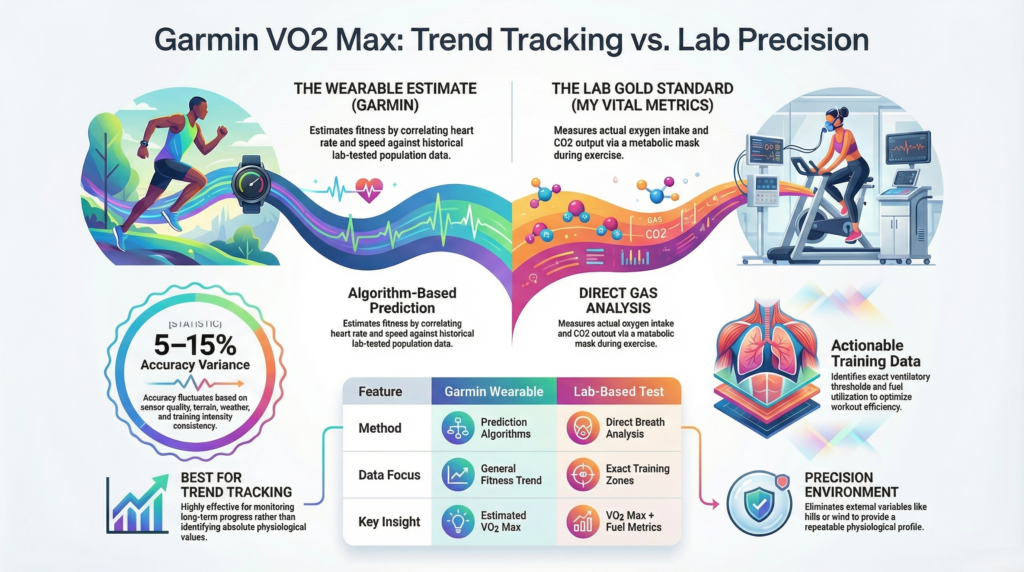
It is important to clarify that Garmin watches do not measure VO2 Max; they estimate it. Because a watch cannot analyze the gas composition of your breath, it utilizes algorithms developed by Firstbeat Analytics. These algorithms look for correlations between heart rate, pace, power output, and heart rate variability. By comparing your data against a database of thousands of previously tested individuals, the watch predicts where your aerobic capacity likely falls.
The Reliability Gap: Watch vs. Laboratory
While Garmin provides a convenient daily snapshot, several factors can skew the results:
- Sensor Accuracy: Wrist-based optical heart rate sensors are prone to ‘noise’ from movement and sweat, which can lead to significant data errors compared to medical-grade chest straps.
- Environmental Variables: Factors like heat, humidity, and elevation change the relationship between heart rate and pace, often causing the algorithm to underestimate fitness.
- Algorithm Assumptions: The software assumes you are training at near-maximal efforts to provide an accurate estimate. Sub-maximal training may result in a reading that does not reflect your true ceiling.
Research suggests that while highly trained runners may see accuracy within 5% of laboratory values, recreational users often experience a variance of 10-15%. In clinical terms, this could be the difference between a ‘fair’ and ‘excellent’ fitness classification.
The Gold Standard: Lab-Based Gas Analysis
For those looking to optimize their training or longevity protocols, lab-based testing remains the gold standard. During a clinical test, every breath is analyzed to determine actual oxygen consumption and carbon dioxide production. This provides precision data that wearables cannot reach, including your specific ventilatory thresholds and fat-oxidation zones. Peer-reviewed research, such as studies published in the Journal of the American College of Cardiology, has consistently shown that higher cardiorespiratory fitness is directly linked to a significantly lower risk of all-cause mortality, making accuracy in this metric essential for health planning.
Conclusion: Using the Right Tool for the Job
Your Garmin is an excellent tool for tracking long-term trends and maintaining daily motivation. However, if you require precise data to set training zones or evaluate metabolic health, a laboratory assessment is indispensable. By combining the convenience of wearable tracking with the accuracy of clinical testing, you can build a more effective, data-driven approach to your fitness and longevity.
Stay updated with the latest in health science by signing up for our newsletter: https://newsletter.centralive.health/signup