ARPA-H REST Program: Revolutionizing Sleep Health Through Closed-Loop Technology
The Advanced Research Projects Agency for Health (ARPA-H) has announced the Restorative & health-Enhancing Sleep Time (REST) program. This ambitious initiative aims to transform the current sleep medicine landscape by shifting from clinic-based polysomnography to objective, home-based, and personalized technologies that can detect and respond to sleep microstructures in real time. Approximately 150 million Americans suffer from poor sleep, a condition that significantly increases risks for dementia, hypertension, and metabolic dysfunction (Colten & Altevogt, 2006).
Scope of Research and Development
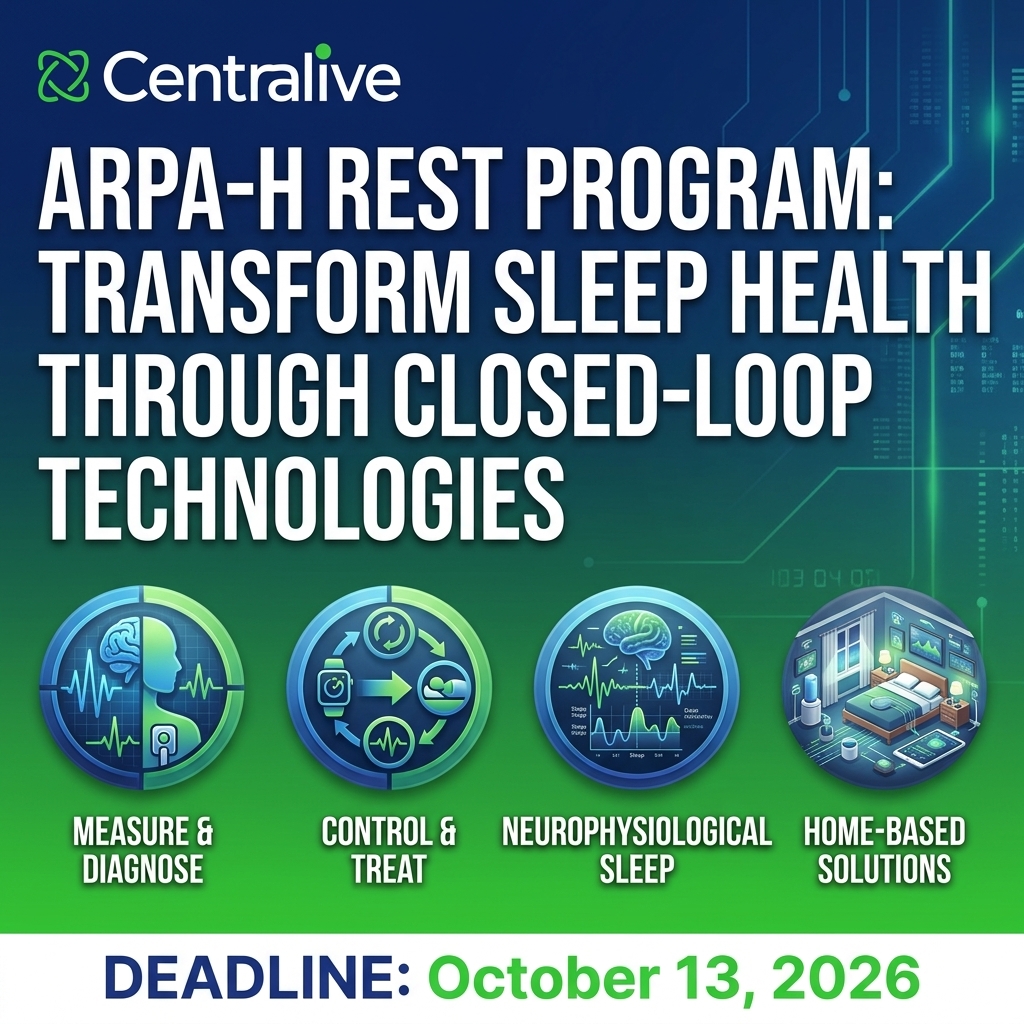
The REST program is structured around two primary Technical Areas (TAs):
- Technical Area 1 (TA1): Measure & Diagnose. Focused on developing wearable or nearable hardware and software capable of capturing clinical-grade physiological signals at home to classify insomnia subtypes.
- Technical Area 2 (TA2): Control & Treat. Focused on noninvasive, real-time neuromodulation (e.g., acoustics, haptics) that adapts to the user’s unique sleep physiology to improve restorative outcomes.
The ultimate goal is a 66-month effort to create an integrated system that increases insomnia treatment response rates from the current 50% gold standard to over 90%.
Eligibility and Deadlines
ARPA-H invites proposals from a wide range of organizations, prioritizing those that conduct work within the United States. Key details include:
- Eligibility: Commercial entities, academic institutions, and non-profit organizations are encouraged to apply. FFRDCs and government entities are not permitted as prime performers.
- Solution Summary Deadline: August 12, 2026, at 12pm ET.
- Full Proposal Submission Deadline: October 13, 2026.
- Award Instrument: Other Transaction (OT) authority.
Partnership and Ecosystem Integration
Proposers are encouraged to demonstrate how their solutions will interface with the broader REST ecosystem, which includes shared foundational modeling resources and independent verification and validation (IV&V) teams. Collaboration between hardware developers, AI/ML specialists, and clinical researchers is essential to bridge the gap between sleep measurement and meaningful health impact.
Stay updated on the latest health tech funding: https://newsletter.centralive.health/signup