
Centralive Blog
Want to know more about the Centralive features? Read our blog posts here.
Missing Nights in Wearable Sleep Studies: How to Handle Non-Wear When Participants Forget the Device
One of the most common questions researchers ask when designing a wearable sleep study is deceptively simple: what do you do about the nights a participant forgot to put the device on, or the stretch where a sensor quietly stopped recording? Every real-world deployment produces these gaps. The mistake is treating them as a nuisance […]
Read More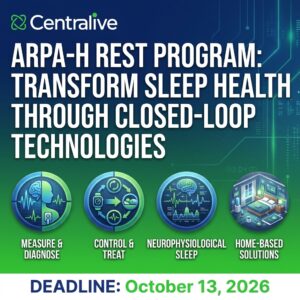
ARPA-H REST Program: Revolutionizing Sleep Health Through Closed-Loop Technology
ARPA-H announces the REST program: a bold initiative to transform sleep health via objective, home-based, closed-loop technology. Apply by August 12, 2026.
Read More
Unsupervised Learning Identifies Sleep Disturbance Subtypes Among Dementia Caregivers
AI-driven clustering of wearable data reveals 3 distinct sleep subtypes in dementia caregivers, enabling tailored health interventions. Read the full study.
Read More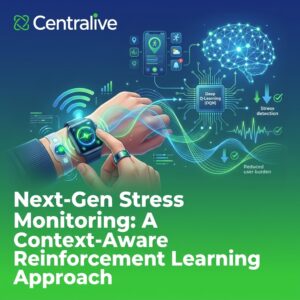
Enhancing Performance and User Engagement in Everyday Stress Monitoring: A Context-Aware Active Reinforcement Learning Approach
New research uses Deep Q-Learning to slash user burden in stress monitoring by 88% while boosting detection accuracy via context-aware EMA triggers. 🚀
Read More
Garmin’s Screenless Revolution in Biometric Monitoring
Garmin’s screenless device redefines health data with high-fidelity biometrics and raw accelerometer access for personalized health-tech development.
Read More
What Compliance Rate Should You Set as a Minimum Threshold, and How Do You Enforce It?
Stop guessing your wearable data thresholds. Learn why the 80% rule causes sample bias and how to set evidence-based compliance rules for valid research results.
Read More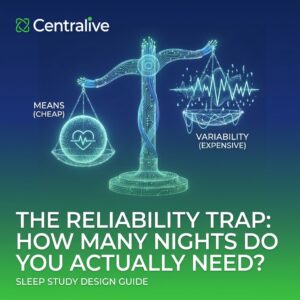
One of the most common questions from researchers designing a wearable sleep study is deceptively simple: how many nights of data do I need before my estimate of a participant’s sleep is stable and representative?
How many nights of wearable data do you really need? Learn why 7 nights is enough for habitual means, but 60+ nights are required for sleep variability study.
Read More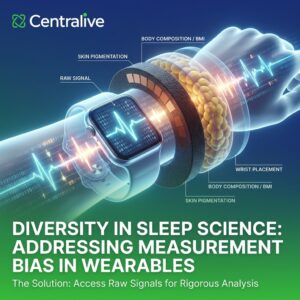
Does Skin Tone, BMI, or Dominant Hand Affect Sleep Measurement Accuracy?
Does skin tone or BMI skew your wearable data? Discover the evidence-based reality of PPG bias and the framework for ensuring accuracy in diverse sleep studies.
Read More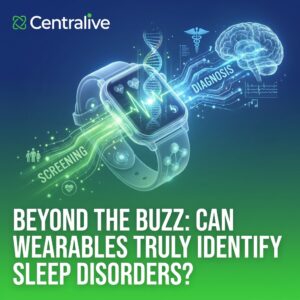
Can Wearables Identify Sleep Disorders Like Insomnia, Sleep Apnea, or Restless Legs?
Can wearables diagnose sleep disorders? Explore the evidence for OSA, Insomnia, and RLS, and why raw signal access is critical for research-grade accuracy.
Read More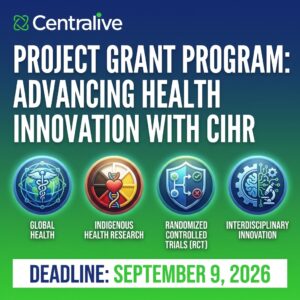
CIHR Project Grant Program: Funding the Future of Health Research
The CIHR Project Grant Program offers funding for high-impact health research. Registration for the Fall 2026 competition closes August 12, 2026. Apply now!
Read More