Remote Tracking of Sleep, Depression, and Cognition in Early Adolescence
Methodology
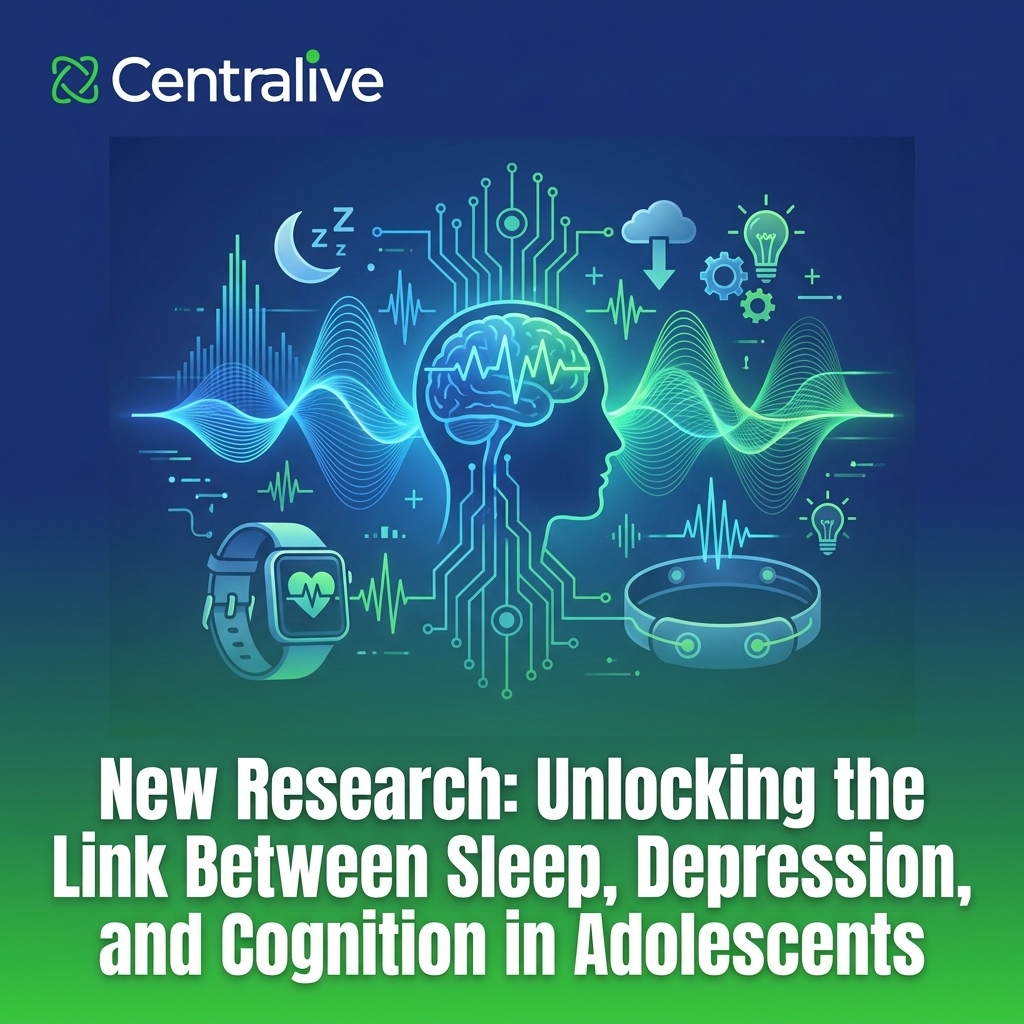
The study utilizes a longitudinal measurement burst design, tracking 56 youth aged 9 to 13 years over four assessment waves (baseline, 4, 8, and 12 months). Participants utilize the HowRU app alongside wearable technology, including the Garmin VivoSmart 5 watch and Interaxon Muse S headbands, to capture real-world data on sleep architecture, physical activity, and daily mood via ecological momentary assessments (EMAs).
Findings
Initial data from the protocol indicates high adherence rates for remote monitoring, suggesting that mHealth platforms are a feasible method for long-term tracking of youth mental health. The integration of remote EEG and cognitive tasks (such as the Word-Pair Associates and Operation Span tasks) allows for the first longitudinal analysis of how sleep-dependent memory consolidation interacts with depressive symptom severity.
Impact
This research provides a reproducible framework for identifying developmental periods of vulnerability. By understanding the bidirectional relationship between sleep disruptions and depression, clinicians can develop more precise, sleep-based interventions to improve cognitive and mental health outcomes in adolescents. Precision medicine in psychiatry depends on the ability to monitor these dynamic associations in naturalistic settings.
This research was powered by the Centralive Platform.
Full Paper Link: https://www.researchprotocols.org/2026/1/e86345
Authors: Katharine C Simon, Lia Galut, Spencer Polk, Shun Iwata, Weining Shen, Mahyar Abbasian, Amir Rahmani, Uma Rao, Jessica L Borelli, Sara C Mednick
Join our network for deeper insights: https://newsletter.centralive.health/signup