Researching Behavioral and Cognitive Signals of Aging in Real-World Contexts
The National Institutes of Health (NIH) has released a highlighted topic focused on the intersection of computational behavioral analysis and aging. This initiative seeks to move beyond isolated clinical events by capturing temporally structured patterns of human behavior—such as recurring sequences, transitions, and rhythms—to identify functional changes throughout the human life span.
Scope of Science
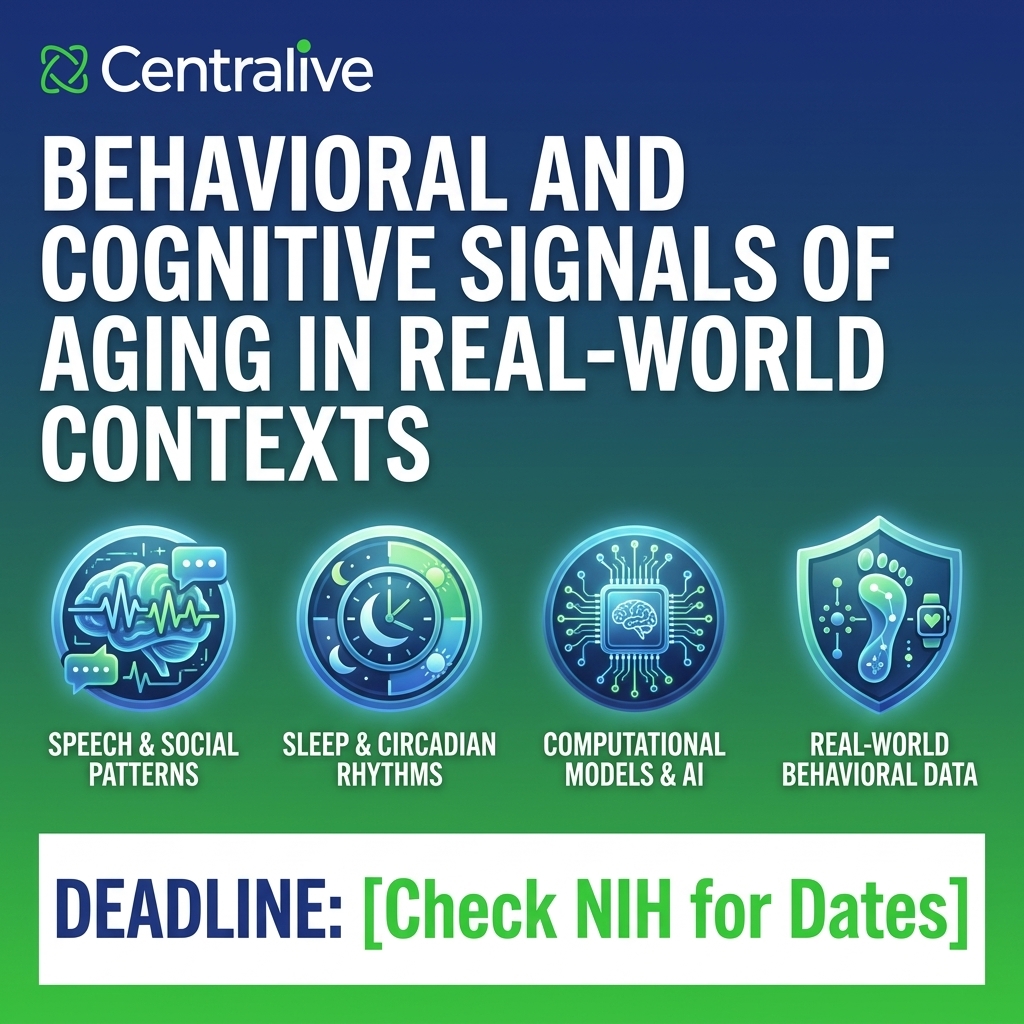
The primary objective is to leverage real-world data streams to derive “cognitive vital signs.” These longitudinal indicators, sourced from everyday activities, speech, and interaction patterns, offer the potential to complement traditional clinic-based assessments. Peer-reviewed research has consistently demonstrated that continuous monitoring of behavioral metrics can provide earlier detection of neurodegenerative conditions compared to snapshot clinical visits (Kaye et al., 2011). Key areas of interest include:
- Characterization of recurring behavioral patterns like sleep-wake cycles and navigation routines.
- Validation of cognitive vital signs derived from speech, language use, and multitasking behavior.
- Computational methods to extract temporally structured patterns rather than relying on aggregate measures.
- Approaches to improve the reproducibility and transferability of behavioral signals across different platforms.
Eligibility and Application
This is not a specific notice of funding opportunity (NOFO). Instead, investigators are encouraged to apply through existing NIH Parent Funding Announcements or other broad opportunities available on Grants.gov.
Participating Partnerships
Three major institutes are spearheading this interest:
- National Institute on Aging (NIA): Focusing on early pathophysiological and functional decline, including Alzheimer’s disease.
- National Cancer Institute (NCI): Examining behavioral signals within the cancer control continuum, specifically acute and late effects of treatment on cognitive function.
- National Institute of Mental Health (NIMH): Supporting the integration of real-world behavioral data into mental health research frameworks.
More info: https://grants.nih.gov/funding/find-a-fit-for-your-research/highlighted-topics/73
Stay updated on the latest health tech funding: https://newsletter.centralive.health/signup